Eliminating Drain Smells Before Your Final Tenancy Inspection
If there is one thing that will undo an otherwise excellent end-of-tenancy clean faster than almost anything else, it is a smell. Not a visible stain, not a scuffed wall, not even a questionable oven – a smell. Check-out clerks walk through properties with their eyes open and their noses equally alert, and a drain smell that you have lived with long enough to stop noticing will announce itself to a fresh nose within seconds of the front door opening. I have watched tenants lose deposit money over drains in properties that were, by every visual measure, immaculate. The flat looked wonderful. It just smelled like something had gone wrong underground, which tends to overshadow the freshly cleaned windows considerably.
Drain smells in rental properties are both extremely common and almost entirely fixable – but only if you understand what is actually causing them, because the cause determines the solution. Pouring something aggressively scented down a drain and hoping for the best is not a strategy. It is a delay tactic, and a short-lived one at that.
Why Drains Smell – and Why the Answer Is Not Always Obvious
The Usual Suspects: Biofilm, Blockages, and Buildup
The most common source of drain smell in a residential property is biofilm – a layer of organic matter that accumulates on the interior walls of pipes over time. Hair, soap residue, grease, food particles, skin cells – all of it builds up, begins to decompose, and produces the specific sulphurous, faintly rotten smell that is the signature of a neglected drain. It is not glamorous, but it is biology, and it is happening in virtually every drain in every property to some degree at all times.
Kitchen drains accumulate grease and food matter. Bathroom sink and shower drains accumulate soap scum and hair. Both will produce noticeable odour if left unaddressed for the length of a typical tenancy, and the smell will intensify in warmer weather – which is, of course, precisely when tenancies tend to end and properties tend to be inspected.
A partial blockage will accelerate this process considerably. Water that drains slowly sits in contact with decomposing organic matter for longer, and slow drainage is also a sign that the blockage itself is growing. A drain that empties slowly and smells is telling you two things at once, and both of them need addressing before the inspection.
The One Everyone Misses: The Dry P-Trap
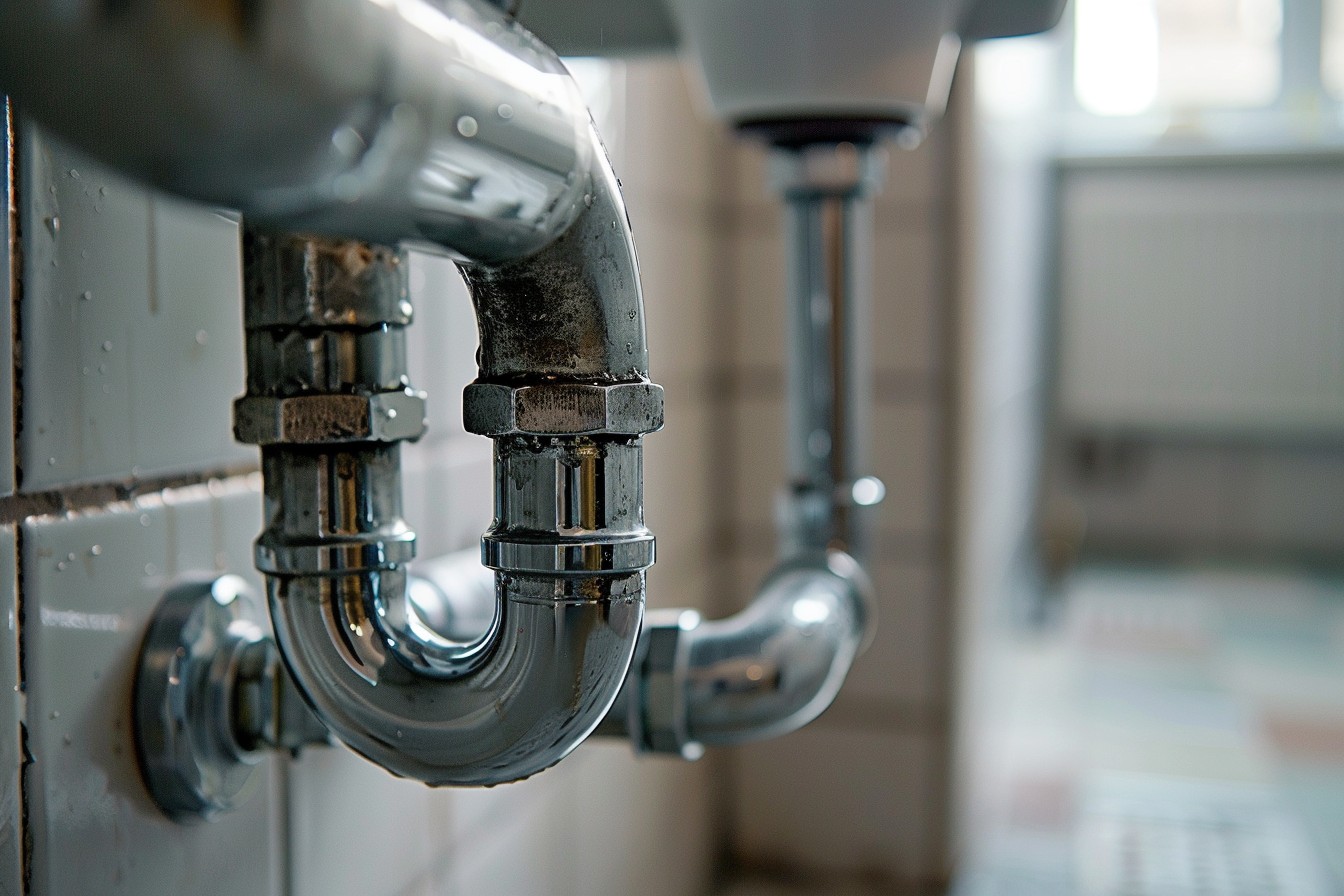
This is the cause that catches people out most reliably, including – I will be honest – some tenants who had been told about it and still forgot. Every drain in a property has a P-trap: the curved section of pipe beneath the plughole that holds a small reservoir of water. That water acts as a seal, preventing sewer gases from travelling back up the pipe and into the room. It is a simple, elegant solution to an unpleasant problem, and it works perfectly – right up until the trap dries out.
In a property where a bathroom or utility sink has been rarely or never used during the tenancy, the P-trap water evaporates and the seal disappears. What follows is a direct channel from the sewer system into the room, and sewer gas smells like precisely what it is. If you have a bathroom or shower room that is not your primary one, or a utility sink in the kitchen that has barely been touched, run the tap for thirty seconds and pour a small amount of water down every plughole in the property. Do this a few days before the inspection rather than the morning of, to ensure the trap has fully refilled. This is one of the quickest, cheapest fixes in the entire end-of-tenancy process, and it is responsible for eliminating a disproportionate number of drain smells entirely.
Kitchen Drains – The Grease Problem and How to Actually Solve It
Why Boiling Water Alone Is Not Enough
There is a widely circulated piece of kitchen drain advice that goes: pour boiling water down the drain and it will clear the grease. This is partially true and entirely insufficient as a standalone solution. Boiling water will soften and partially shift surface grease, but it does nothing for established biofilm on pipe walls, it will not clear a partial blockage caused by accumulated fat, and in a rental kitchen that has been cooking regularly for twelve months, the buildup will be well beyond what hot water alone can address.
The correct approach is sequential. Start by removing and cleaning the drain cover, which will almost certainly be hosting a collection of material that does not bear close examination but must be dealt with regardless. Then address the pipe itself with a proper degreasing agent – a dedicated drain cleaner or a bicarbonate of soda and white vinegar combination, followed by hot water, works well for moderate buildup. The bicarbonate and vinegar approach produces a satisfying chemical reaction that helps dislodge biofilm from pipe walls. Leave it to work for at least twenty minutes before flushing through with the hottest water your tap will produce.
For a drain that is slow as well as smelly, a drain snake or hand auger is worth the modest investment. A blockage that is causing slow drainage will not be resolved by any amount of product poured over it – it needs to be physically broken up or extracted. Drain snakes are available from any hardware shop for a few pounds, and using one is considerably cheaper than a plumber and considerably more effective than hoping the smell goes away on its own.
The Bin and the Drain – A Relationship Worth Reconsidering
One of the most effective long-term solutions to kitchen drain smell is also the most straightforward: stop putting food waste down the drain. Food scraps, coffee grounds, cooking fat – all of these belong in the bin, not the sink. Fat in particular is insidious because it goes down as liquid and solidifies further along the pipe, building up over months into a blockage that no amount of bicarbonate will shift without mechanical assistance. If you have been in the habit of washing food remnants down the sink during the tenancy, the drain will reflect that, and dealing with the consequences before the inspection is a more involved job than it would have been if the habit had never started.
Bathroom Drains – Hair, Soap Scum, and the Smell of a Thousand Showers
Getting Physical Before Getting Chemical
Bathroom drain smell almost always has a physical component – a hair clog sitting in the drain or just below it, coated in soap scum and decomposing slowly. No chemical product will eliminate the smell if the physical source is still in place. The first step in any bathroom drain treatment is extraction, and it is exactly as appealing as it sounds.
A drain claw – a small, flexible plastic tool with barbed edges, available for under five pounds – is the correct tool for this job. Insert it into the plughole, rotate, and withdraw. What comes out will be unpleasant. Remove it, dispose of it, and repeat until nothing more comes. Then, and only then, apply your cleaning product – a drain unblocker or a bicarbonate and vinegar treatment – to address the residual biofilm on the pipe walls.
Overflow Outlets – The Part of the Sink Nobody Cleans
The overflow outlet – the small hole near the top of a bathroom sink basin that prevents the sink from flooding if the tap is left running – is one of the most reliably overlooked sources of bathroom smell in residential properties. It connects internally to the drain pipe and accumulates the same biofilm as the drain itself, but because it is out of sight and not obviously a drain, it simply never gets cleaned.
To treat it, fill a pipette or a small squirty bottle with a diluted bleach solution or a dedicated drain cleaner and apply it directly into the overflow hole. Leave it for twenty minutes and flush through. The smell improvement in a bathroom that has not had its overflow cleaned during the tenancy can be remarkable – sometimes accounting for the majority of the odour in the room.
The Pre-Inspection Sequence – Doing This in the Right Order
Timing matters with drain treatment, and the order in which you address different drains affects the result. Work through the property methodically rather than reactively. Start with any drains that are slow or that have visible buildup, as these will need the most treatment time. Address the P-traps in all infrequently used sinks, baths, and showers. Clean the overflow outlets in all bathroom basins. Treat the kitchen drain last, as it typically requires the most attention and benefits from a second treatment if time allows.
Do all of this at least two to three days before the inspection, not the morning of. Products need time to work fully, traps need time to refill, and if a treatment reveals a more serious blockage that requires mechanical intervention or, in the worst case, a plumber, you need the time to deal with it. A drain smell discovered the evening before the check-out is an emergency. The same smell discovered four days before is a manageable problem.
What Drain Smell Can Signal About the Property Itself
When the Smell Is Not Coming from Your Drain
This is worth addressing briefly, because occasionally a persistent drain smell in a rental property has nothing to do with the tenant’s drains at all. Shared drainage systems in older converted flats – of which Hackney and Brixton have a considerable number – can produce smells that migrate between properties. A cracked or deteriorating soil stack can allow sewer gas to enter wall cavities. These are structural or building maintenance issues, not cleaning ones, and if the smell persists after thorough drain treatment throughout the property, it is worth raising in writing with the landlord before the inspection. Document that you have treated all drains, note that the smell persists, and request a plumber’s assessment. This establishes clearly that the issue is not one of tenant neglect – a distinction that matters if the conversation later turns to deposits.
Closing Thoughts
Drain smell is a fixable problem that becomes an unfixable impression the moment a check-out clerk walks through the door and notices it. The tenants who sail through their final inspection without a drain-related comment are rarely the ones whose plumbing was inherently superior – they are the ones who treated the drains methodically, dealt with the P-traps, cleaned the overflow outlets, and did all of it early enough to confirm the job was done. The whole process, in a standard two-bedroom flat, takes a few hours spread across a weekend. The deposit deduction it prevents can be considerably more than the cost of a few bottles of drain cleaner and a five-pound drain claw – and considerably less satisfying to argue about in a Deposit Protection Scheme adjudication.